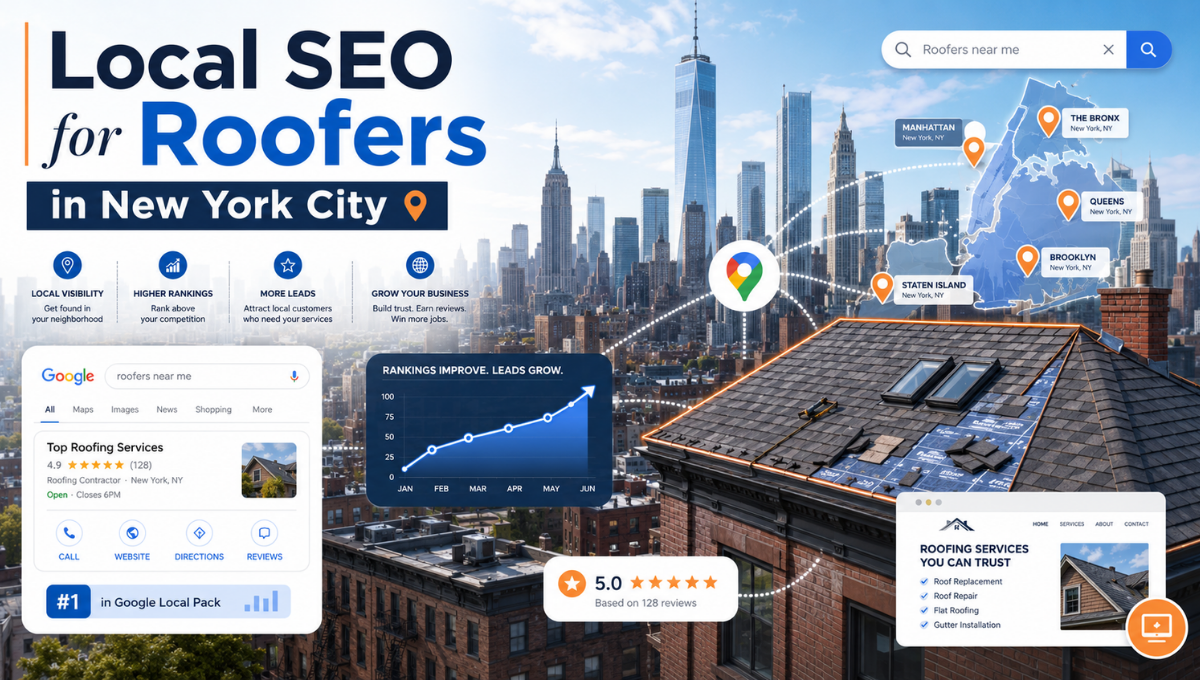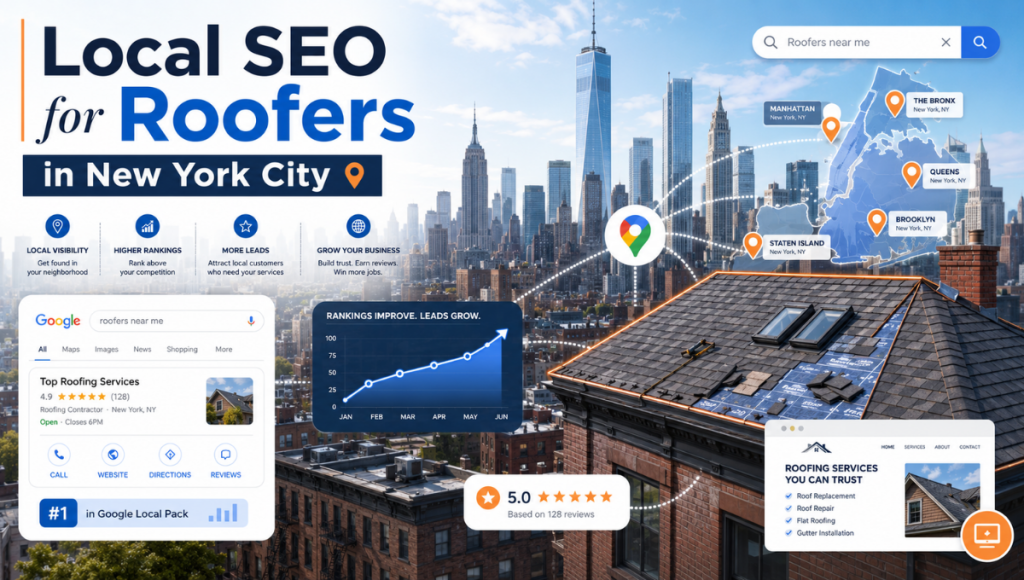
Local SEO helps roofing companies in New York City reach nearby customers who search for roof repair, roof replacement, emergency roofing, commercial roofing, flat roofing, storm damage repair, and other local roofing services.
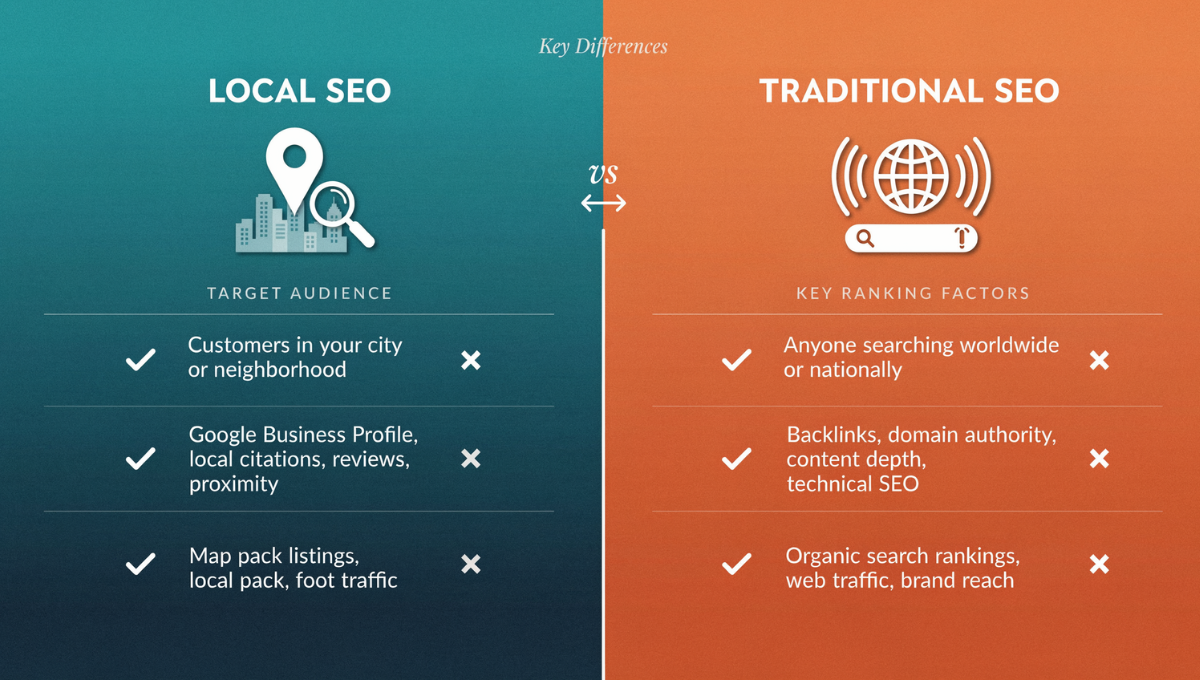
For an NYC roofing contractor, local SEO mainly improves visibility in Google Maps and local organic search results.
A roofing company does not need hundreds of thin location pages or keyword-stuffed content. The company needs accurate business information, a strong Google Business Profile, useful service pages, relevant location pages, genuine customer reviews, accurate citations, local backlinks, and clear proof of service.
Google should clearly understand three relationships:
Roofing Company → Provides → Roofing Services
Roofing Company → Serves → NYC Locations
Customers → Trust → Roofing Company
How Does Google Rank Local Roofing Companies in NYC?
Google mainly evaluates local businesses through relevance, distance, and prominence.
Relevance measures how closely a roofing company matches a search. A business creates relevance through its Google Business Profile, service pages, location pages, categories, and website content.
For example:
Roofing Company → Provides → Roof Repair
Roofing Company → Serves → Brooklyn
These relationships help Google understand why the business may be relevant to “roof repair Brooklyn.”
Distance measures how close the business is to the searcher. Proximity matters heavily in Google Maps, especially across a large and dense market like New York City.
Prominence reflects how established and trusted a company appears online. Reviews, backlinks, citations, local mentions, project history, and industry relationships can strengthen prominence.
A strong local SEO strategy improves relevance and prominence while recognizing that proximity still affects Maps rankings.
1. Find the Right Local Roofing Keywords
Keyword research should start with roofing services that generate real revenue.
Then connect each service with the locations where the company genuinely works.
The basic formula is:
Roofing Service + Location
Examples include:
- Roof repair Brooklyn
- Roof replacement Queens
- Commercial roofing Manhattan
- Metal roofing Staten Island
- Storm damage roof repair Bronx
- Emergency roof repair NYC
- Flat roof repair New York City
- Roofing contractor Brooklyn
- Roofing company Queens
- Commercial roofing contractor NYC
Neighborhood-level keywords may also work when the area has enough commercial value.
Examples include “roofer Astoria,” “roof repair Long Island City,” and “roofing contractor Williamsburg.”
Do not choose keywords only because they have high search volume.
A term such as “emergency roof repair Brooklyn” may receive fewer searches than “roofing,” but it shows much stronger hiring intent.
Each major keyword should also match the correct page.
Roof Repair Page → Targets → Roof Repair Intent
Roof Replacement Page → Targets → Replacement Intent
Commercial Roofing Page → Targets → Commercial Intent
This structure reduces keyword cannibalization and helps Google identify the best page for each search.
2. Optimize Your Google Business Profile
A Google Business Profile is one of the most important assets for local SEO for roofers.
Use the real business name. Select the most accurate primary business category. Add secondary categories only when they represent genuine services.
Keep important information complete and current:
- Business name
- Phone number
- Website
- Business hours
- Service areas
- Roofing services
- Business description
- Photos
- Videos
Real roofing photos can strengthen trust.
Upload photos of roof repairs, roof replacements, flat roofs, commercial roofs, storm damage, inspections, crews, work vehicles, and before-and-after projects.
Local project photos also create stronger geographic context.
A Brooklyn rowhouse project can demonstrate Brooklyn experience, while a Manhattan commercial flat roof can demonstrate experience with Manhattan properties.
3. Set Accurate Roofing Service Areas
A roofing company should list only areas where its crews genuinely provide service.
An NYC contractor may serve:
- Brooklyn
- Queens
- Manhattan
- The Bronx
- Staten Island
Some companies may also serve nearby markets such as Yonkers or Westchester.
Adding a location to a Google Business Profile does not guarantee rankings there. Google still considers proximity.
A roofing company should therefore support each target area with real evidence, including:
- Completed jobs
- Customer reviews
- Local project photos
- Testimonials
- Case studies
- Relevant website content
The company should target locations where actual business activity supports the claim.
4. Create a Page for Each Important Roofing Service
A general “Our Services” page usually cannot satisfy every roofing search intent.
Create dedicated pages for important services such as:
- Roof Repair
- Roof Replacement
- Emergency Roof Repair
- Commercial Roofing
- Flat Roofing
- Metal Roofing
- Storm Damage Repair
- Roof Inspection
Each service page should answer questions that customers ask before contacting a roofer.
A roof repair page may cover leaks, damaged shingles, flashing problems, water intrusion, storm damage, flat roof problems, inspections, and repair options.
A roof replacement page may explain roofing materials, roof condition, property type, cost factors, project timelines, inspections, permits, and condo or co-op approval where relevant.
Specific information is more useful than generic claims.
Roofing Company → Inspects → Roof Condition
is clearer and more meaningful than vague language such as “We provide the best roofing solutions.”
5. Create Useful NYC Location Pages
Location pages can improve organic visibility across multiple NYC boroughs.
However, every location page should provide unique value.
Do not copy a Brooklyn page, replace “Brooklyn” with “Queens,” and publish it again.
A strong location page can include:
- Roofing services offered
- Common property types
- Common roofing systems
- Local roofing challenges
- Recent projects
- Testimonials
- Before-and-after examples
- Weather concerns
- Inspection process
- Estimate process
- Links to relevant services
A Brooklyn roofing page may discuss rowhouses or brownstones when the company has real experience with those properties.
A Manhattan page may focus more on commercial properties or flat roofing when that reflects actual project history.
A few strong borough pages usually provide more value than dozens of thin neighborhood pages.
6. Improve On-Page Local SEO
On-page SEO helps Google connect services, locations, and customer needs.
Use clear page titles such as:
Roof Repair in Brooklyn, NY | Company Name
or
Commercial Roofing Contractor in Manhattan | Company Name
A roof repair page can naturally include related entities and terms such as:
- Roof leaks
- Emergency repairs
- Damaged shingles
- Flat roof repair
- Flashing
- Water damage
- Roof inspection
- Roofing contractor
- Local roofing company
Do not repeat the exact keyword “roof repair Brooklyn” in every paragraph.
Google needs context, entities, and natural topical relationships rather than keyword stuffing.
Improve Internal Linking
Internal links should connect related services and locations.
For example:
Brooklyn Roofing Page → Links To → Roof Repair Page
Brooklyn Roofing Page → Links To → Emergency Roofing Page
Roof Repair Page → Links To → Relevant Location Pages
This creates a clear structure:
Service → Location → Customer Need
Accurate structured data can also help search engines interpret basic business information, but schema should support strong content rather than replace it.
7. Collect Genuine Google Reviews
Google reviews help customers evaluate a roofing company and can strengthen local prominence.
A roofing company should request reviews after successful projects such as:
- Roof repairs
- Roof replacements
- Roof inspections
- Storm damage restoration
- Commercial roofing projects
Send customers a direct Google review link and ask for honest feedback.
Do not force customers to include keywords.
A natural review that mentions a roofing service, location, or property type can provide useful context without appearing manipulated.
Never buy reviews or offer rewards in exchange for positive feedback.
Consistent, genuine reviews create a stronger long-term reputation.
8. Build Accurate Local Citations
A local citation is an online mention of important business information such as the company name, address, phone number, and website.
Consistent information helps search engines verify the identity of the business.
Useful citation sources may include:
- Major business platforms
- Chambers of commerce
- Roofing associations
- Manufacturer directories
- Industry directories
- Local business organizations
Focus on accuracy and relevance rather than building hundreds of low-quality listings.
Genuine manufacturer certifications and roofing association memberships may also strengthen credibility.
9. Earn Relevant Local Backlinks
A backlink becomes more valuable when another website has a legitimate reason to mention the roofing company.
Potential sources include:
- Roofing manufacturers
- Building suppliers
- Property management companies
- Contractors
- Architects
- Real estate businesses
- Local organizations
- Business associations
- Local news publications
Community projects, partnerships, sponsorships, and distinctive roofing projects may also create natural link opportunities.
For example:
Roofing Company → Restores → Brooklyn Brownstone Roof
Local Publication → Covers → Restoration Project
This type of relationship creates stronger topical and local relevance than hundreds of unrelated backlinks.
Quality and relevance matter more than backlink quantity.
10. Publish Content Around Real NYC Roofing Questions
Service pages target people who already know which service they need.
Informational content reaches customers earlier in the decision-making process.
Useful topics include:
- How much does roof replacement cost in New York City?
- When should a roof be repaired instead of replaced?
- Why does a flat roof keep leaking?
- What causes flashing leaks?
- What should you do after storm damage?
- How often should a commercial roof be inspected?
- How long does roof replacement take?
- What happens during a roof inspection?
- What should a condo or co-op board check before roofing work?
- What questions should you ask a roofing contractor?
Answer the primary question early, then provide supporting details.
Real project experience makes content more useful.
If the company regularly handles flat roof drainage, flashing leaks, storm damage, brownstones, commercial systems, or NYC approval requirements, the content should reflect that experience.
Specific expertise builds stronger topical relevance than generic SEO writing.
11. Track Local SEO Results That Generate Business
A roofing company should not measure success only through keyword rankings.
The company should measure whether visibility generates real business.
Important metrics include:
- Google Maps visibility
- Organic clicks
- Search impressions
- Phone calls
- Contact forms
- Estimate requests
- Qualified leads
- Booked roofing jobs
- Closed revenue
Google Search Console can show which searches bring users to the website.
Analytics can show how visitors interact with pages.
Google Business Profile data can provide additional information about customer interactions.
Local map rank tracking can also reveal how visibility changes across NYC neighborhoods.
If traffic increases but leads remain flat, investigate possible problems such as wrong search intent, weak calls to action, poor service pages, slow website performance, weak trust signals, confusing contact forms, or weak local presence.
Traffic matters only when it supports business growth.
Frequently Asked Questions
What Is Local SEO for Roofers?
Local SEO for roofers improves a roofing company’s visibility in Google Maps and location-based organic search results.
It usually includes Google Business Profile optimization, service pages, location pages, reviews, citations, backlinks, and locally relevant content.
How Can a Roofer Rank Higher on Google Maps?
A roofer can improve Maps visibility by maintaining an accurate Google Business Profile, selecting relevant categories, listing genuine services and service areas, collecting real reviews, and strengthening website authority.
Proximity can still affect rankings.
Do Roofing Companies Need Location Pages?
Yes, when the company genuinely serves those areas and can provide useful location-specific information.
Strong borough or city pages should usually come before large numbers of thin neighborhood pages.
What Are the Best Local Keywords for NYC Roofers?
Strong local roofing keywords combine service, location, and search intent.
Examples include “roof repair Brooklyn,” “roofing contractor Queens,” “commercial roofing Manhattan,” “emergency roof repair NYC,” and “flat roof repair New York City.”
Local SEO for roofers in New York City depends on clear relationships between the business, its services, locations, customers, and trust signals.
The core semantic structure should remain simple:
Roofing Company → Provides → Roofing Service
Roofing Company → Serves → NYC Location
Customer → Searches For → Roofing Solution
Service Page → Answers → Customer Need
Reviews and Backlinks → Strengthen → Business Trust
A roofing company should optimize its Google Business Profile, create strong service and location pages, collect genuine reviews, maintain accurate citations, earn relevant backlinks, publish useful roofing content, and track qualified leads and booked jobs.
When every local SEO signal consistently explains what the company does, where it works, and why customers should trust it, Google can understand the business more clearly.
That clarity can help the roofing company build stronger visibility in Google Maps and local organic search results across New York City.