Local SEO is essential for small businesses looking to attract customers nearby and rank well in search results. With Google’s regular updates and the growing influence of AI, it’s crucial to keep your strategy updated. Here’s a simple guide to help you improve your local SEO, the best local SEO strategy for small businesses
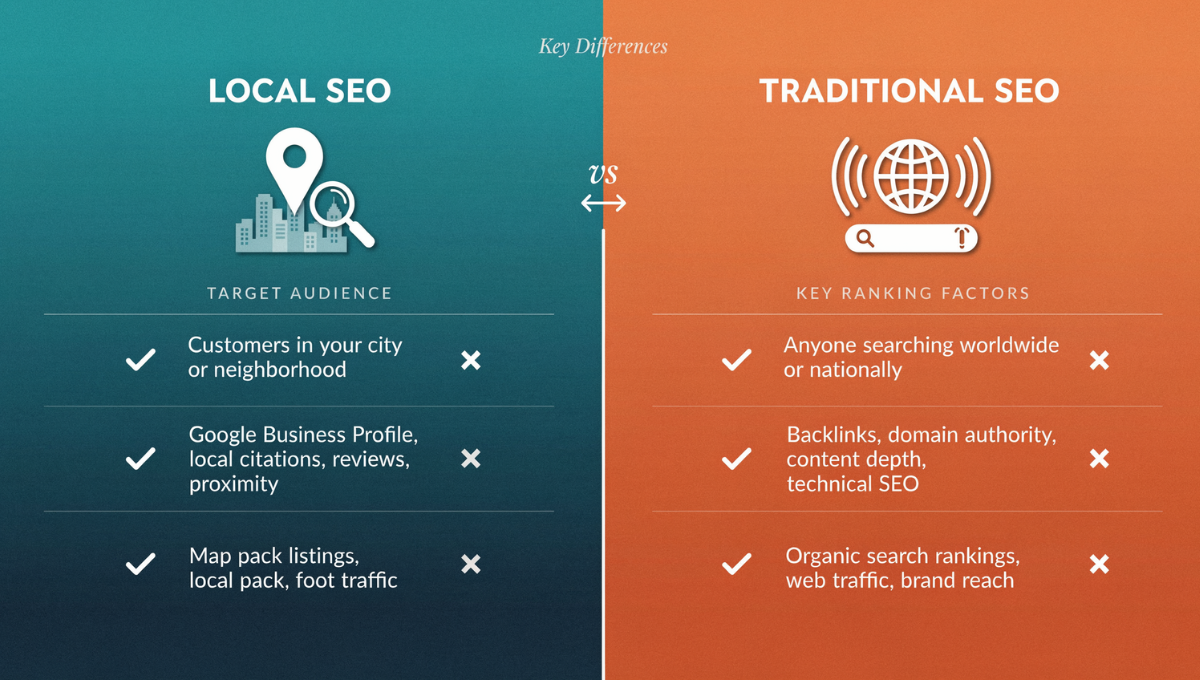
Key Differences Between Local and General SEO
Some difference about Local & General SEO. We discuss about them below:
| Aspect | Local SEO | General SEO |
|---|---|---|
| Target Audience | Local customers | Global audience |
| Ranking Factors | Google Business Profile, local citations, reviews | Backlinks, content quality, keywords |
| Search Results | Map Pack, local listings | Organic search results |
Why Local SEO Matters for Small Businesses
For small businesses, local search engine optimization is crucial. It ensures that your business is visible when people search for products or services near them, increasing the chances of converting searchers into paying customers. Without effective local SEO, small businesses may struggle to compete with larger players who have more established digital footprints.
Local Search vs. General Search Algorithms
Local SEO algorithms prioritize proximity, relevance, and prominence to rank businesses within a local area. In comparison, broad SEO algorithms rely more on the quality of website content, backlinks, and overall domain authority to rank pages globally.
Why Local SEO is Essential for Small Businesses in 2025
In today’s hyper-competitive digital marketplace, local SEO optimization is more important than ever. Here’s why small businesses should prioritize local SEO in 2025:
Increase Visibility in Your Local Market
Local SEO ensures that your business appears in search results when potential customers search for services in your area. By optimizing for local search intent, you increase the likelihood of driving foot traffic and online inquiries.
Attract Local Customers
By targeting geo-targeted keywords and optimizing your website for local searches, you attract customers specifically looking for businesses in your neighborhood. This increases the chance of conversion, as local searches often indicate higher intent.
The Growing Role of Mobile Search
With mobile search on the rise, especially for “near me” queries, having a mobile-friendly website optimized for local SEO is essential for ranking higher and improving user experience. Google’s mobile-first indexing means that businesses with a mobile-optimized site are more likely to rank in local searches.
Where Your Business Can Rank with Local SEO

Local Organic Search Results
These are the unpaid search results that appear when users search for location-specific services. By optimizing your website with local keywords and on-page SEO tactics, your business can rank higher in these results.
Local Map Pack (3-Pack)
The Local Map Pack, also known as the 3-Pack, showcases the top three businesses in a local search query, along with a map. Ranking in the Map Pack is essential for businesses looking to attract nearby customers.
Factors That Affect Map Pack Rankings
To rank in the Map Pack, businesses must optimize their Google Business Profile (GBP) and ensure NAP (Name, Address, Phone Number) consistency across the web. Engaging with customer reviews and earning local backlinks can also boost prominence in this highly visible area.
Benefits of Local SEO for Small Businesses
1. Improved Brand Awareness in Your Area
By appearing in local search results, your business becomes more visible to customers in your geographic area, helping to build brand recognition. This is especially important for businesses relying on local traffic.
2. Higher Rankings Lead to More Conversions
As your rankings improve in local search results, your business becomes more likely to convert searchers into paying customers. Local SEO helps attract users who are ready to make a purchase or schedule a service.
3. Stand Out from Local Competitors
Local SEO helps differentiate your business from others in your area. By optimizing your digital presence, you ensure that your business stands out and attracts more local leads.
4. Build Trust and Reputation
Incorporating semantic search elements into your website content, like customer testimonials and accurate business info, helps build trust with local consumers. Responding to reviews and engaging with customers online also strengthens your reputation within the community.
Key Local SEO Ranking Factors
Local Organic Rankings
On-Page SEO: Optimizing for Local Keywords
For local SEO, using location-specific keywords in your website content, meta tags, and headings signals to search engines that your business is relevant to a particular area. Including semantic terms related to your industry and location boosts content relevance.
Local Link Building: Why Local Backlinks Matter
Building local backlinks from trusted websites (e.g., local news sites, business directories, and blogs) improves your domain authority and relevance in local search results. Backlinks from reputable local sources enhance your site’s trustworthiness.
User Engagement and Click-Through Rates (CTR)
Search engines like Google consider behavioral signals, such as user engagement, CTR, and time spent on the site, as part of their ranking algorithms. Engaging, high-quality content helps improve these metrics, making it easier to rank higher in local results.
Local Map Pack
Google Business Profile (GBP): Proximity, Relevance, and Prominence
Google uses three main factors—proximity, relevance, and prominence—to rank businesses in the Map Pack. Optimizing your GBP ensures that your business appears in relevant local searches.
Online Reviews: Impact on Prominence
Positive reviews signal to Google that your business is trusted by local customers, helping improve your ranking and visibility in local search results. Encourage satisfied customers to leave reviews on Google and other platforms.
Local Citations: Consistency is Key
Local citations—mentions of your business on other websites—are important for local SEO. Ensuring that your NAP details are consistent across all platforms helps improve your local ranking.
Effective Local SEO Strategies

1. Mobile-Friendly Website
A mobile-optimized website is a must for local SEO. With the majority of local searches happening on mobile devices, Google prioritizes mobile-friendly sites in local search results.
2. Target Location-Specific Keywords
Use keyword research tools to find location-specific keywords your target audience is searching for. Integrate these keywords naturally into your content, headings, and metadata.
3. Optimize Meta Tags for Local Search
Craft meta titles and descriptions that include your location and relevant services to improve your click-through rates in local search results.
4. Create Location-Specific Pages
If your business serves multiple locations, create individual pages tailored to each area. These pages should feature content that speaks to the needs and interests of customers in each location.
5. Optimize Your Google Business Profile
Claim and update your Google Business Profile regularly. Ensure your business name, address, phone number, and operating hours are accurate. Add photos and respond to reviews to increase engagement.
6. Encourage Customer Reviews
Customer reviews are crucial for local SEO. Encourage your happy customers to leave positive reviews on Google, Yelp, and other review platforms.
7. Build Local Backlinks
Partner with local organizations and events to earn backlinks from high-authority local sites. These links can significantly improve your local rankings.
8. Use Social Media for Local SEO
Engage with your local community on social media platforms. Share location-based content, tag your location in posts, and interact with followers to improve your local SEO efforts.
Advanced Local SEO Techniques
1. Hyperlocal SEO
Targeting even smaller areas, such as specific neighborhoods or districts, helps businesses in competitive markets rank better for hyperlocal searches.
2. Leverage Local Influencers
Partnering with local influencers can help raise brand awareness and improve your local SEO. Influencers with a strong local following can drive more traffic to your business.
3. Adapt to AI-Driven SEO Trends
As AI evolves, it will increasingly impact SEO strategies. Tools that analyze semantic content and user behavior can help refine your approach and stay ahead of competitors.
Measuring Local SEO Success
1. Monitor Local Keyword Rankings
Use tools like Google Search Console and Ahrefs to track your rankings for local keywords and monitor changes in your visibility.
2. Analyze Reviews and Ratings
Customer feedback influences both your reputation and your search rankings. Track reviews to see how they’re impacting your local SEO performance.
3. Track Map Pack Rankings
Monitor your appearance in the Local Map Pack and adjust your SEO strategy to improve or maintain your ranking.
Staying Ahead in Local SEO
Stay Updated on Algorithm Changes
Google regularly updates its local search algorithms. Stay informed about these changes to adjust your strategy and maintain strong local rankings.
Ongoing SEO Optimization
Local SEO is an ongoing effort. Regularly update your website, Google Business Profile, and online citations to maintain high visibility.
The Future of Local SEO
As AI and semantic search become more integrated into search algorithms, local SEO will evolve. Keeping up with these trends is crucial for staying competitive.
Invest in Local SEO: Unlock Business Growth
Investing in local SEO is one of the best strategies for small businesses to boost visibility, attract local customers, and drive growth. With local SEO, you can build a stronger connection with your community and stand out from the competition. By staying on top of local SEO trends, you’ll unlock long-term success for your business.